Tech startup Hyphen is bringing AI to the lunch line — with help from Cava and Chipotle
San Jose, California — At a time of slumping sales and stock prices, major fast-casual chains Chipotle and Cava are making strategic bets on kitchen automation, investing millions in startup Hyphen and its robotic makelines. This push aims to solve twin industry crises: the need for blistering speed during peak hours and the chronic challenge of finding reliable labor, all while cutting food waste and costs.
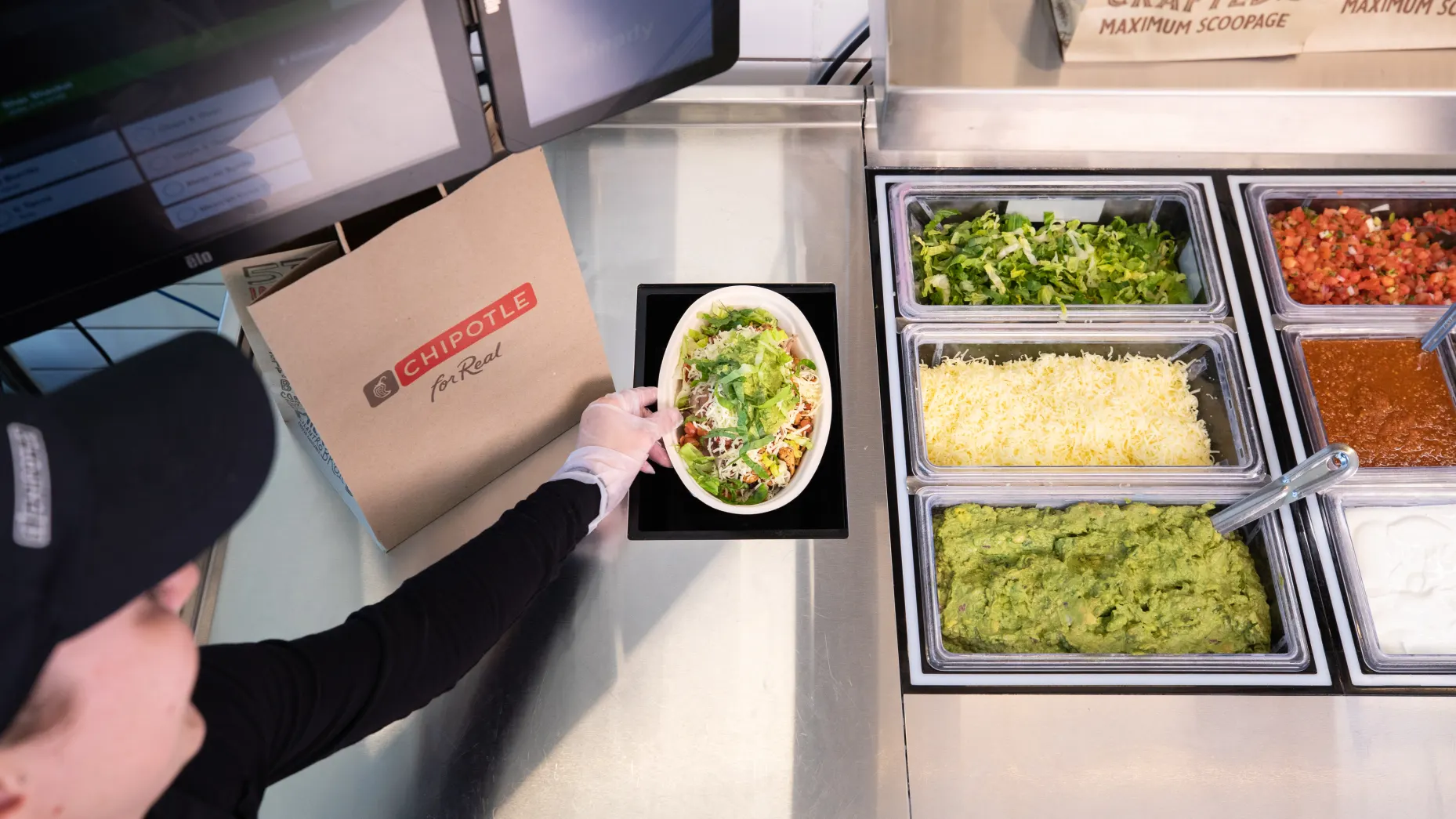
Hyphen's technology, which can assemble a customized bowl or salad every 10-15 seconds, represents a critical strategic pivot for restaurant operators. “We’re probably making a bowl every 10 to 15 seconds. At peak throughput, we have more capacity usually than they do demand,” said Hyphen CEO Stephen Klein. The systems, costing $50,000 to $100,000, promise a return on investment in under a year by perfectly portioning ingredients “down to the gram.”

A finished burrito bowl assembled by Chipotle and Hyphen’s automation technology.
A High-Stakes Investment in Efficiency
The financial commitments are significant. Chipotle has invested $25 million into Hyphen through its venture fund, while Cava contributed up to $10 million in a recent funding round. These moves come as both companies’ shares have plunged nearly 40-50% in 2025 amid a broader consumer pullback. For them, automation is not just an experiment but a calculated play to defend margins and improve throughput in a fiercely competitive ecosystem.
The technology is designed for a seamless integration. Robotic arms work beneath a counter, out of customer view, assembling meals that are then finished by a human employee—akin to an “escalator turning into stairs” if the system fails. This hybrid model focuses on automating the repetitive, high-volume core of assembly while retaining human touch for customization and service.
Targeting the Fast-Casual “Strike Zone,” Not Traditional Fast Food
Hyphen’s strategy is deliberately focused on complex, high-customization menus. “We’re really trying to help people that have really a high mix... as well as high volume. So that’s kind of our strike zone,” Klein explained, explicitly ruling out the simpler menus of traditional fast food for now. This positions the company as a specialist in the fast-casual high-stakes race, where labor intensity and ingredient costs are particularly pressing.
The startup’s roadmap extends beyond hardware. It aims to develop backend software for kitchen management, leveraging the precise data its systems collect. This evolution from robotic arms to a comprehensive data platform could represent the next major strategic maneuver in restaurant operations, offering predictive analytics for food prep and inventory.
As chains like Sweetgreen sell off their own robotics units, the contrasting bets highlight an industry in flux, urgently seeking technological solutions to restore profitability and customer traffic in an uncertain economic climate.
Recent
News




Newsletter
Subscribe to our mailing list to get the new updates!

Subscribe our newsletter to stay updated
Most
Reviews
Business

- Thu, 15 Jan 2026
FC Barcelona Receives $135 Million Cash Injection From UEFA
Finance

Finance

Finance

- Mon, 26 Jan 2026
Gold rips past $5,000 on fears of global turmoil
Business